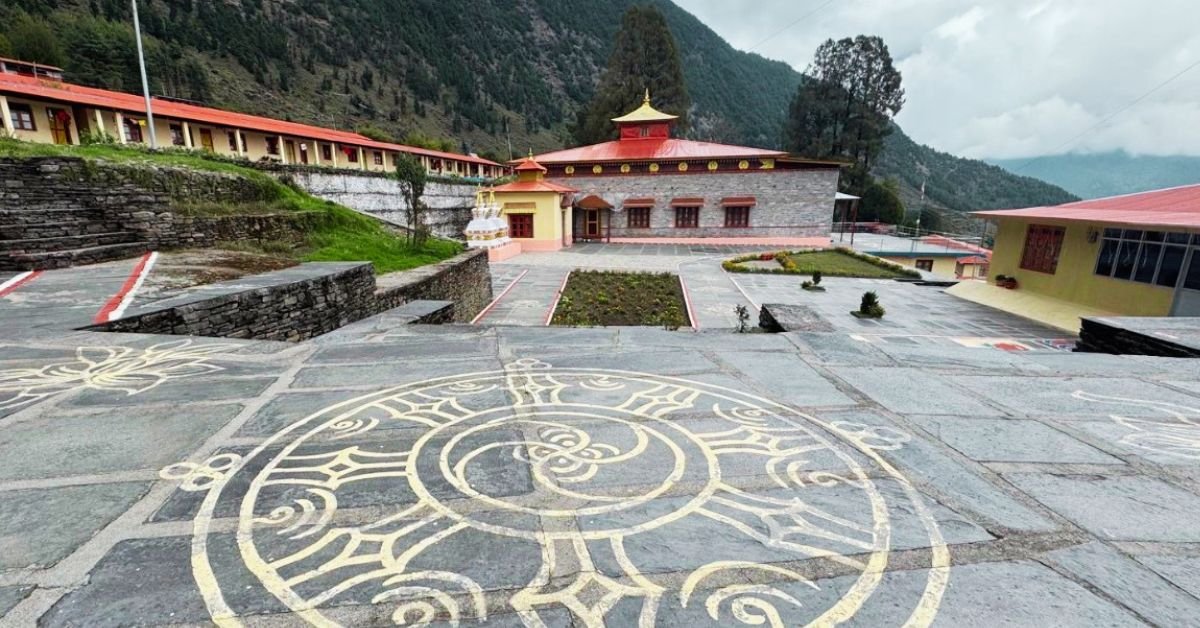

After the completion of the magnificent journey to Tsho Rolpa Lake, we started our journey to Bigu Gompa from Gongor Khola. After breakfast in Gongkhor Khola, we followed the way to Shaylu and Thadi because today’s destination was at Warang. From Gongkhor Khola, the walking trail was steep up and had stone steps almost all the way to Upper Thadi. Upper Thadi, where we had a quick lunch, Noodle soup, and boiled eggs. From there, the walking trail was Nepali flat and easy to walk to Warang.
Today’s walk to Warang was completely different from the walk to Rolwalling Valley, because we mostly walked through the villages. We witnessed the local people’s daily lifestyle and the remoteness of the region. Along the way mostly met with the Tamang people and families; some of the old people were wearing the Tamang traditional attire. Even though we stayed with the Tamang family at Warrang village, we also shared their food, of course, Dal Bhat.
The next morning, we had noodle soup for breakfast before we commenced our journey to Bigu Gompa. Today’s destination was Loting village, although it was longer than yesterday. Again, we walked through the typical local villages like Yarsa, Bhulung, Ladhuk, Chilanka, and enjoyed seeing their everyday lives. Ultimately, we reached Loting around 4:30 pm after a long day’s walk because we started our walk at 7 am in the morning.
Our third day’s journey to Bigu Gompa was a bit short but a tough walk from Loting to Bigu. The first part was on the Nepali flat and inside the jungle; however, after crossing the river, the real walk started. Because the walking trail was up and the steps, which made everyone a bit tired when we reached Bigu Gompa. Along the way, we ate local yellow berries because there were a lot of them along the way, as it was the season for those yellow berries.
Bigu Gompa – A Hidden Sanctuary of Serenity in the Himalayas of Nepal.
Arriving at Bigu Gompa was an unforgettable experience in my life.
The Monastery is located peacefully on a hillside of the Dolkha District, overlooking the deep valleys. When we entered, I fell in love with the silent environment and the peaceful atmosphere. The nuns are very welcoming, friendly, and helpful. Our first day at Bigu Gompa was just relaxing and enjoying the scenery and calm atmosphere.
The second day of the journey to Bigu Gompa started with the sound from the monastery of the nun chanting and other monastic instruments. We sat down inside the monastery for one and a half hours, which was pure meditation and inner peace within ourselves. After completion of the morning rituals, I spent sometime to observed the beauty and significance of the monastery. It was rebuilt after the devastating earthquake in April 2015, so it looks new, but the surrounding environment was just the consensus.
My trip to Bigu Gompa was with the international trekkers from the Netherlands, and it was a continuous journey after the Tsho Rolpa Trek. As it was a completely different atmosphere, one of the travellers said, “This feels like the Nepal I always dreamed about it” and I also felt similar, where nature, culture, and spiritual under a roof.
Our third day of the journey to Bigu Gompa started with morning meditation and prayers at the monastery. After meditation, we packed our bags and were ready to check out from there to Kuri Kalinchowk. When we packed our Jeep was there to take us to Kuri via Dolkha Charikot. This was our Bigu Gompa Trekking journey from Gongor Khola to Bigu Gompa.
How to get Bigu Gompa?
There is a road connection to Bigu Gompa from Kathmandu, and there is a direct bus service from Kathmandu. But the bus service is not reliable, because it depends on the road conditions; if the road conditions are not good, the bus might not go to Bigu. So it’s better to take a bus from Kathmandu to Charikot or Singati and then take a private Jeep to Bigu Gompa, which is more convenient for travelers.
Bigu Gompa Trek Itinerary
If you are making a journey to Bigu Gompa from Kathmandu, you can follow this itinerary. Or also can follow the itinerary which we followed via the Gonggor Khola to Bigu via Warrang, Ladhuk, and Loting, but it will require more days and long days of walking, but it is very beautiful to follow.
Day 1: Drive from Kathmandu to Bigu Gompa
- Scenic drive from Kathmandu
- Enjoy the beauty of the local villages and people’s lifestyle.
- Overnight at the monastery guest house
Day 2: Explore and observe the Bigu Gompa
- Feel the peace, calm, and compassion of the morning prayers
- Connect with nuns and know their daily lifestyle in the Gompa.
- Enjoy the sunrise and sunset glimpse from Bigu Gompa.
- Overnight at the monastery guest house
Day 3: Drive back to Kathmandu
- Enjoy the morning sunrise
- Involved in the morning prayers and meditating with nuns
- Drive back to Kathmandu.
Why you should visit Bigu Gompa?
- A journey into the remoteness.
- Historical and spiritual significance
- Architecture, setting, and natural beauty
- Daily life at the Monastery
- Cultural encounter
- A place for self-reflection
Best time to visit Bigu Gompa
The best time to visit Bigu Gompa is in spring (March, April, and May), autumn (September, October, and November), and Winter (December, January, and February)
The spring season is good for the view, and during this season, there will be rhododendron flowers blooming. Autumn season is another best time because this season offers the best view of the year, and winter season is a bit cold, but there will be the best view of the surrounding areas and the mountain.
Final Thoughts – This journey to Bigu Gompa is more than just a destination.
As a trekking and tour guide, I have been to many adventures and beautiful places in Nepal. But very few of them offer the same experience as Bigu Gompa.
Bigu Gompa is the place that reminds ME that beautiful journeys are not about reaching the top of the highest peak – but about finding the inner and outer peace along the way.

Great information shared.. really enjoyed reading this post thank you author for sharing this post .. appreciated
very informative articles or reviews at this time.