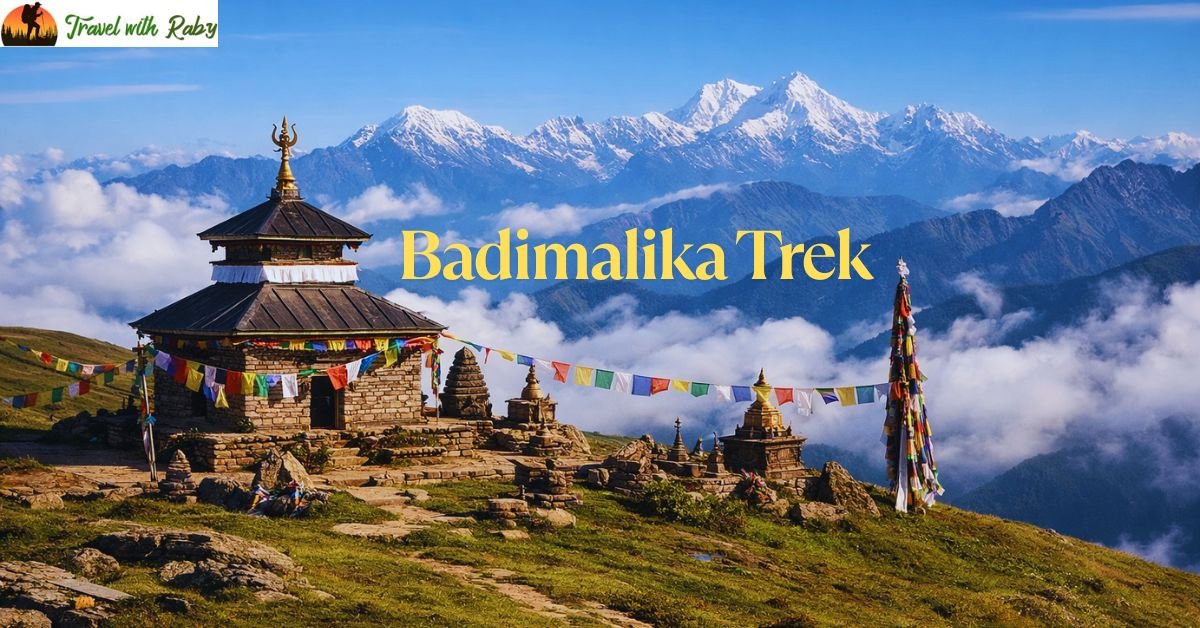

Badimalika is located in the far western part of Nepal, a less crowded trail, beyond the glossy brochure, and very far from the reach of mass tourism. Lies in a special land where still Mountains and nature feel sacred, and the journeys are spiritual as they are material. Trekking to Badimalika is not only a walk through the alpine meadows and highland forests. It is a journey into folklore, civilization, and the raw beauty of the Himalayas.
Badimalika Temple is one of the most respected Shakti Peeths in the far western region of Nepal. A sacred place where belief has guided footsteps for centuries before hiking boots existed. Thousands of pilgrims from Nepal and India make a challenging journey to worship Goddess Bhawati. They believe that the mountains and nature itself are alive with divine energy. Badimalika Trek is a rare and powerful destination for those who are seeking spirituality, solitude, and unspoiled wilderness.
Badimalika Trekking is for those who want to explore and stay away from the popular trekking and hiking routes. And they walk into a peaceful environment, the deeper Himalaya, where every elevation feels deserved, and every sunrise and sunset feels personal.
Cultural and Mythological Significance: The energy of Badimalika
Badimalika stands for it important Hindu pilgrimage sites, as per its legend, this is one of the places where a part of Sati’s body fell. This is the reason this place is one of the most significant Shakti Peeths in Nepal. There is no huge infrastructure to signify this place; the temple itself is a modest one, often marked by a stone structure and prayer. But the significance of the place touches profoundly.
Each year, during the Janai Purnima in between August and September, thousands of pilgrims make a challenging pilgrimage to worship there. It is believed that making a journey to Badimalika cleanses past sins and fulfills deep desires. That’s why some people walk barefoot and some fast along the way till they get to Badimalika.
Trekking to Badimalika Temple will allow a Trekker to witness the devotion of the locals, adding an emphatic cultural layer to the journey. So, doing this Trek, you are not just walking through the mountains; you are walking through belief, tradition, culture, and living history.
Terrains of Silence: Nature at its Pristine.
The most remarkable feature of the Badimalika Trek is its silence and holiness. While trekking, you won’t be in the crowds, with no noisy atmosphere, and no queues of walkers ahead or behind you. There is a peaceful wind moving through the grassland, the sound of bells of the animals, and the infrequent chirps of birds across the valleys. During the sunrise and sunset, the landscapes shine with a quiet intensity. The golden light dribbling over hills that seems to breathe with obsolete remembrance.
Scenic Highlight
Panoramic View- The panoramic vistas of the far western Himalayan Range, including Api Saipal.
Rumbling Alpine Meadows – Stretching endlessly under the open skies.
Forest aisles – Filled with Oak, Pine, and Rhododendron. And Rhododendron will bloom during the winter season.
High Ridges – Where clouds rise below your feet.
The Badimalika Temple – A small but powerful shrine
Flora and Fauna: Life Flourishing in Isolation
The ecological beauty of the Badimalika Region offers a surprise majesty for trekkers. Because of the fewer human disruptions, nature here thrives freely and shows its beauty and reality.
Flora: Depending on the travelling season and the trail passes through.
Alpine Gresses and Wildflowers
Medicinal Herbs, which are traditionally harvested by the locals.
Pine, Oak, and other plant forests.
Rhododendron forest, which will bloom during the spring season.
Fauna: Various kinds of wildlife can be seen when we do the Badimalika Trek. Such as the Himalayan Deer, wild goats, Foxes, Jackals, and many more. And also the various species of birds like Himalayan Peasants, eagles, and many more.
The Trekking Route: A Sacred Trail Carved by Time and Belief.
Most of the journey to Badinalika starts from Kathmandu, followed by a scenic flight to Dhangadi or Nepalgung, and then a drive to Martadi. Or take a very long drive from Kathmandu to Martadi, the district headquarters of Bajura. From here, take a four-wheel drive to the starting point of the trek.
The Badimalika Trek route is not a specified trail or formalized itinerary. This is off the beaten path and untouched land located in the far western region, the Bajura district. The route to Badimalika varies slightly depending on the starting and ending points, weather, and local guidance. The most common beginning and ending points are Martadi, Kolti, or Pilichaur. Trekking through the forested ridges, typical villages, valleys, and high ranges to reach the sacred plateau of Badimalika.
Unlike other commercial trekking routes like Everest, Annapurna, Langtang, etc., you don’t find tea houses at every stop. There are very simple lodges, temporary shelters, or tents to sleep overnight. That’s why trekking to Badimalika Hill is a semi-camping experience for you. The walking days are quite lengthy but enormously rewarding, with topography that feels wild and timeless.
Practical Information for Trekkers – A trekker should know or consider these parts before embarking on the journey.
Best Season to visit Badimalika
June to September – This period is best because of the local pilgrimages and the lush landscapes.
April to May – During these months, the rhododendron flowers will bloom, and clear skies give you the best experience.
September to November – These are the months to travel in Nepal for any kind of trekking and excursion. During this time period, the weather will be perfect because of the view and temperature.
Difficult level of the Badimalika Trek:
This is a moderate to challenging level trek because of the altitude, long walking days, and limited facilities. So a trekker must have good fitness and mental strength to accomplish this pilgrimage.
Preparation Tips:
- Must hire a local guide who knows the routes and weather conditions
- Pack light, but be ready to face the variable weather conditions.
- Be respectful of local customs and religious practices.
- Carry essential supplies, including food and camping gear.
- Prepare physical and mental strength before starting the trek.
Reevaluation: Badimalika More Than A Trek
To be at the Badimalika grassland, with cool and chill wind, mountains overlooking endlessly in every movement. So the journey you’re making is not just reaching the summit of Badimalika ridge. It is about reconnecting with nature by slowing down, listening, and feeling with culture and quietly spiritual.
Badimalika region does not have dramatic glaciers, and the world’s highest famous snowy peaks. Instead that it will give a deeper mark one humbleness, gratefulness, and reverence. You will return with a sense of having touched a Nepal that only a few foreigners ever see, not only with photographs.
Badimalika Trek offers something very rare: the destination is sacred, the trekking trails are honest, and the adventure remains with you extremely long after the mountain disappears into the memory.