

The Mustang Tiji Festival is an annual Buddhist event that is celebrated for three days at the beginning of every harvest season in Lomanthang, Upper Mustang. The Tiji word came from the Tibetan word Ten Che – It means “The hopes of Buddhism prevailing in the world for love and consensus.” The theme of the celebration is the victory of God over the demons to protect the Mustang from devastation.
As the legend relates to the Tiji festival, a brave boy called Dorje Jono (Lord Buddha’s incarnation)fights to oppose his demonic father (Mha Tam Rhu). His father, Mha Tam Rhu, created devastation in Upper Mustang by causing thunderstorms and water shortages in the area. In the end, Dorje Jono wins the fight against his father and chases his father away from the Mustang region. Since then, this auspicious festival has been celebrated in the Kingdom of Lho Lomanthang as the Tiji Festival.
To observe this festival, many foreign tourists go there on the Mustang Tiji Festival Trek and enjoy the authentic cultural and traditional celebration.
Upcoming Date of 2026 Upper Mustang Tiji Festival Trek in Lomanthang.
- Upcoming Tiji Festival 2026 Date – 14th, 15th, and 16th May 2026
- Mustang Tiji Festival 2027 Date – 1st, 2nd, 3rd June 2027
Usually, the Tiji Festival in Upper Mustang is celebrated during the summer season between May and June. So the Upper Mustang Tiji Festival Trek is known as one of the best summer treks in Nepal.
Day-by-day performance of the Mustang Tiji Festival

The Tiji festival will be performed for 3 days in the kingdom of the Lho, Lomanthang. Each day, the monks will perform various dance forms with a strong belief in tracking down the devil in the region. All these dance forms represent different aspects of the celebration, and it’s very significant to do so accordingly. Otherwise, they believe that this region will face a catastrophe in that year.
Day 1: Nga Chham – Innovation and Beginning of the Ritual (The Tiji Festival)
Ceremonial Starts – The Tiji festival begins with the prayer of Dorje Jono (Known as Vajrakila), the main figure of the celebration. And monks perform vocalizing and tantric ceremonies inside the Chhode Monastery.
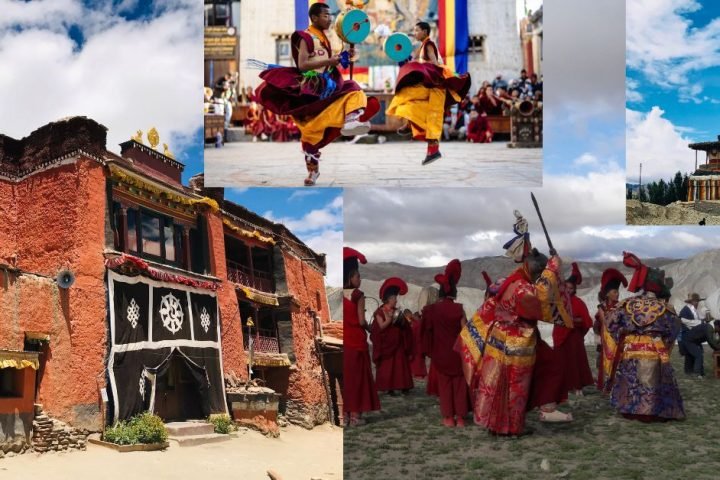
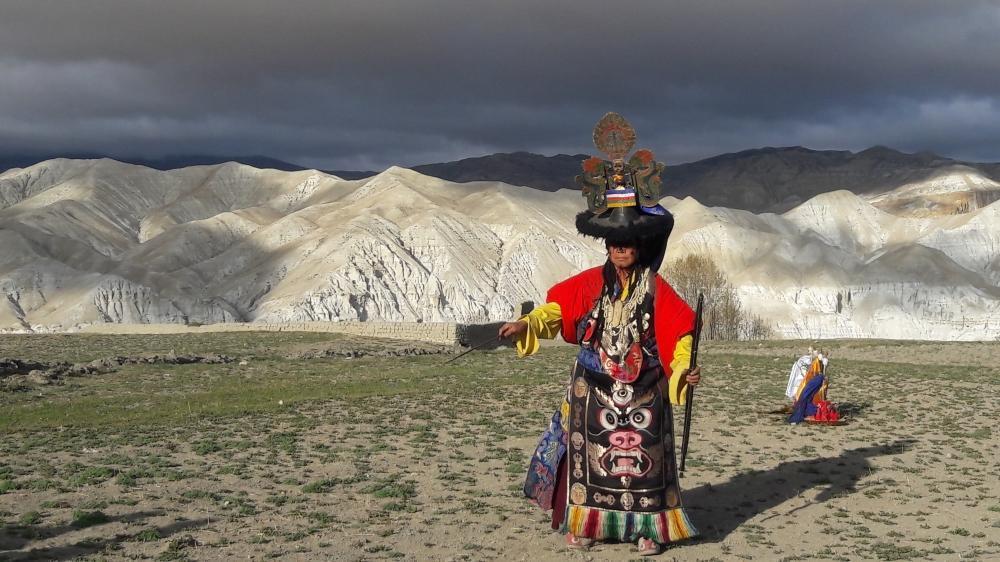
Masked Dance (Cham Dance) Performance Begins – The monks emerge wearing decorated costumes and masks as they begin the Cham Dance, which represents the convene of the demons by the Dorie Jono.
Ritual Instruments and Music – While celebrating the Tiji, there will be used various types of traditional instruments like conch shells, drums, long and short horns, and music will be used to add ambiance to the festival.
The Demon’s Appearance – At the end of the day, the demon who causes drought and suffering makes its figurative impression. And monks represent the evil influence on the world.
Day 2: The battle between God and Evil
Continued Ritual Dance – The monks continue their performance with more intense scenes depicting the battle between Dorje Jono and the demon, and the people whose rendition becomes more dramatic and symbolic.
Use of Sacred Props – While performing, monks will use ritual items like Phurba (Daggers), symbolic effigies, and sacred ropes to assemble and demolish the demon.
Community Gathering – On the second day, there will be a gathering of many locals and tourists in front of the royal palace inside the Lomanthang. Local people will wear traditional Mustang Attire that will create a lively and cheerful atmosphere.
Blessing and Offering – The second day of the Mustang Tiji Festival ends with offerings made to deities for peace, rain, and prosperity, and Monks convey godsend to the attendees.
Day 3: Rha Chham – Triumph and Purification
Final Confrontation – The main attraction and culmination of the Tiji festival, Dorje Jono debacles and banishes the devils. An embodiment of the demon will symbolically be destroyed or thrown away to symbolize the sanctification of evil.
Purification Rituals – The monks will perform purification ceremonies to purify the land and community, and the devil is believed to be thrown away, bringing harmony.
Joyful Celebration – Locals celebrate with singing, dancing, and sharing food. Pilgrims and visitors often receive blessings from high lamas, and the final day ends in triumph and feasting.
Summary of Mustang Tiji Festival Themes:
| Day | Theme | Key Rituals |
| Day 1 | Summoning | Introduction of Dorje Jono, Monks (Dancer) and evil |
| Day 2 | Introduction of Dorje Jono, Monks (Dancer), and evil | Symbolic battle, Monks’ Performance, and use various traditional instruments. |
| Day 3 | Victory | Win over the demon, purification, and community celebration |
Permits Required for the Mustang Tiji Festival Trek

The Upper Mustang area is one of the restricted trekking areas of Nepal. The Tiji festival will be celebrated in Upper Mustang; therefore, it requires a special and normal ACAP (Annapurna Conservation Area Permit) to grant permission to observe the Tiji Festival in Lomanthang.
The special permit will cost USD 500 per person, and it’s just for 10 days. After 10 days, there will be an extra USD 50 per day per person. On the other hand, a normal Annapurna Conservation Area Permit will cost USD 30 for unlimited days. But you need to mention how many days and which trek you want to do.
Issuing a special trekking permit requires a minimum of two persons. This special permit is only issued by registered trekking companies. A licensed trekking guide is mandatory. So, you have to issue the Mustang Tiji Festival Trek permit from a company, as it is not possible for an individual.
To obtain the Upper Mustang region trekking permit, an original passport is essential. With the details of the Nepal visa, such as the visa issue date, arrival date, and expiration date. The permit needs to be applied for through the online form from a trekking company’s portfolio.
2026 Mutang Tiji Festival Trek Itinerary
If you know the Teji Festival celebration date, you can plan according to that and manage your time. Here is the Mustang Tiji Festival Trek Itinerary for 2026. In this itinerary, travel days are from Kathmandu to Pokhara and vice versa. So you need to have extra days.
| May 10, 2026 | Day 1 | Fly to Jomsom and trek to Kagbeni (2810M) |
| May 11, 2026 | Day 2 | Kagbeni to Chaile (3050M) |
| May 12, 2026 | Day 3 | Chaile to Syangbochen (3850M) |
| May 13, 2026 | Day 4 | Syangbochen to Tsarang (3560M) |
| May 14, 2026 | Day 5 | Tsarang to Lomanthang (3810M) and observe day 1 of the Tiji Festival |
| May 15, 2026 | Day 6 | Observe the second day of the Tiji Festival |
| May 16, 2026 | Day 7 | Observe the third day of the Tiji Festival |
| May 17, 2026 | Day 9 | Lomanthang to Dhakmar (3820M) |
| May 18, 2026 | Day 10 | Dhakmar to Syangbochen |
| May 19, 2026 | Day 11 | Samar to Chhusang (2980M)via Chunsi Cave |
| May 20, 2026 | Day 12 | Chhusang to Jomsom (2720M) |
| May 21, 2026 | Day 13 | Fly or Drive back to Pokhara (850M) |
Updated Date and Itinerary of the Tiji Festival 2026. This Itinerary can be changed according to your time and wishes to visit different places. Because there is a lot to explore and visit inside the Mustang. You can add places like Yara, Ghara, and Tangbe, also if you like trekking.
Food and drinking water during the Tiji Festival Trek
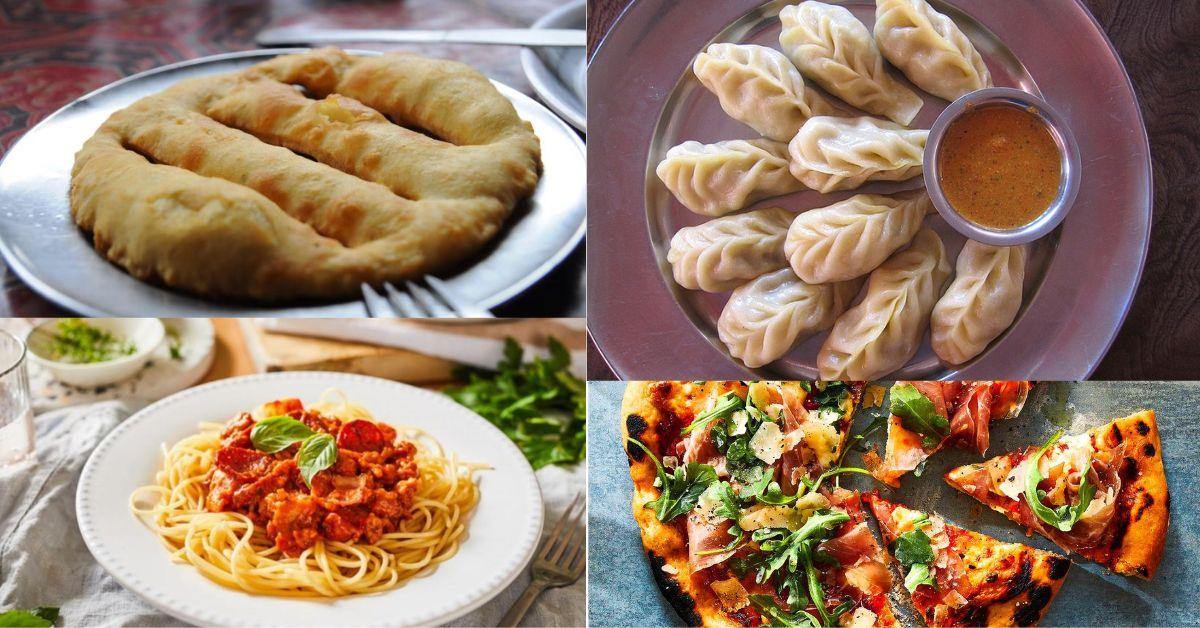
Culturally rich, the Mustang region has its own typical foods and beverages. Due to commercialization, Western, American, Chinese, and Indian cuisine are available in every hotel and guesthouse. So that as trekkers, you can taste the local food as well as international cuisine. Here is what you can expect in terms of food and drinks during the Mustang Tiji Festival Trek,
Breakfast Options
- Tibetan Bread (Fried flatbread) with Jam or Honey
- Porridge (Oat, With Fruits, Cinnamon, or Milk)
- Pancakes (Plain, Apple, Banana, Chocolate, Lemon or Jam, or Honey)
- Tsampa Porridge (Local staple) Roasted barley flour
- Toast with Jam/Honey/ Butter
- Chapati with Jam, Honey
Lunch and Dinner Options
Meals are almost similar for lunch and dinner in every place and guesthouse.
- Dal Bhat (Lentil soup, rice, Seasonal vegetable, Pickles, Papadam). Rice, dal, and veggies are unlimited; best for big eaters.
- Fried Rice – Comes with vegetables, eggs, cheese, mixed
- Momo’s – Dumplings are usually served steamed or fried (Veg, Cheese, Meat, Mixed)
- Thukpa – Tibetan noodles soup with seasonal vegetables, Eggs, or Mixed
- Chowmain – Stir-Fried Noodle with Veg, Eggs, Cheese, and Mixed
- Potato Dishes – Fried, Curry, Mashed, Chilled,
- Spaghetti, Macaroni, or Pasta – Basic Sauces like tomato or cheese
- Pizzas – Basic pizzas with local flavors.
- Chapati or Tibetan Bread with curry or soup.
Drinks
- Tea: Black, Milk, Masala, Mint, Or Local Butter Tea
- Coffee: Instant coffee or specific places have machine coffee as well.
- Bottle (Mineral) or boiled water
- Soft drinks: Coca-Cola, Fanta, Can Juice, etc
- Beers: Nepali beers (Gurkha, Nepal Ice, etc
- Local Alcohol: Raksi, Chhang
Regional specialist
- Yak Cheese – fresh or dried
- Buckwheat Roti – A high-altitude grain (flatbreads or pancakes)
- Mustang apple products – Dried Apple, Apple Pie, Apple Brandy etc
- Butter Tea (Pong Chay) Salty tea made with Yak butter and tea leaves (Acquired Taste)
Important Tips for food and drinks
- Hygiene varies – Stick to freshly cooked food.
- Meat is rare / not recommended – All the meats are transferred from Jomsom or Pokhara.
- Vegetarian options are safer and widely available.
- Stay Hydrated – High altitude requires more water in your body, so always treat your body with water or some kind of drink.
Water: Drinking directly from taps and streams is dangerous, so always use purification methods. Or bottled or boiled water.
Add Extra Activities – Explore Monasteries, Town, and Shopping

The Lomanthang used to be the kingdom of the Upper Mustang, and while staying there,e you can do a lot of things. From here, you can explore many places inside the village and outside of the village as well. You are going to spend three nights there during the Tiji Festival. I suggest exploring more beautiful places nearby inside the Lomanthang. These are the 4 most important activities you can do besides enjoying the vibrant Tenji Festival celebrations.
1: Explore the ancient monasteries.
Inside the Lomanthang, there are three major ancient, historical, and religious monasteries. Visiting the ancient Buddhist shrine will give you the value and importance of the Buddhist religion in Mustang. These monasteries are proof of the history of the Upper Mustang. However, nowadays renovations are going on in those monasteries.
The first one is the Chode Gompa, also called the Dragkar Thegchen Ling Gompa, and this is the one where you have to buy an entry ticket to the monasteries. The second one to visit is the Jampa Monastery, and the third one is the Thupchen Monastery. It says that these monasteries were built between the 13th and 14th centuries.
Do not forget to visit the Gompa Museum to understand more about Mustang and the Mustangi people.
2: Visit Chhoser Village and the China border.
Most of the trekkers who do the Upper Mustang Trek will visit the Chhoser Village. In the Chooser village, there are many fascinating things to see, such as ancient caves, stupas, cave monasteries, and the daily lifestyle of the local people.
Generally, trekkers don’t go to the Chinese border, but I recommend that you visit there too. Because you can see the reality between the Nepal and China border. Normally, the Tiji festival celebration takes place after lunch, so before lunch, you can visit these places. Taking a Jeep or going horse riding are suitable options.
3: Buy souvenirs for your friends and family at Lomanthang.
The Tiji Festival celebration doesn’t start early in the morning. While you wait to participate in the celebration each day, and have nothing to do in the morning, At that time, you can go shopping. Every Hotel have a souvenir shop inside, and also on the streets outside. They will all sell special Mustang items for tourists as souvenirs. Such as painting bracelets, necklaces, and other jewelry items for men and women.
Thanka is a Buddhist symbolic painting; it comes in various types of paintings. These Thankas mostly represent various Buddhist gods and goddesses. So, buying a Thangka painting while enjoying the festival and traveling in Nepal is better than buying one in Kathmandu and Pokhara.
Tibetan costumes and ornaments are also available in Lomanthang. It says that those clothes and ornaments are pure and original. The markets like Kathmandu and Pokhara have copied old and modern styles.
4: Walk around the village, talk with locals, and drink coffee
Lomanthang is quite an impressive and typical walled village. Most of the residents are inside the wall, so walking inside the village allows observing the lifestyle of the local people. Nowadays, there are houses outside the wall as well. It is because of the growing population of the village.
While walking, you can chat with local people sitting near the Royal Palace, and it gives you an understanding of their culture and traditions. And taking some good-quality portrait photos of the local people. Look and ask for permission before clicking their photo because some people don’t like to have their photographs.
Upper Mustang is no longer a remote area of Nepal. This place has already become modernized, which is why you can enjoy modern luxury facilities. So don’t forget to drink a cup of coffee and taste locally made bakery items while exploring the village.
In the end – Mustang Tiji Festival Trek
The Mustang Tiji Festival Trek is one of the oldest celebrations that takes place in the Upper Mustang. Each year, will celebrate for three days at the Walled City of Lomanthang. During this festival, thousands of local people and hundreds of foreigners will be in Lomanthang to witness the beauty of this festival. The main purpose of the celebration of this festival is to clear all the inauspicious and bring peace and prosperity to the whole region. So it will take place just before the harvest season of the entire Mustang region.
It is not just a trek to the Upper Mustang, it is a journey for the curious travelers to connect with humans, ancient rituals, and the beauty of culture and traditions – Tiji Festival.
Upper Mustang Tiji Festival Trek – Frequently Asked Questions
1: What is the Mustang Tiji Festival Trek?
Mustang Tiji Festival Trek is a combined journey to Upper Mustang, Nepal, to explore and observe both the natural beauty and the cultural phenomena of Mustang.
2: What is the Tiji Festival in Upper Mustang?
Tiji Festival is an annual 3-day Buddhist event performed at Lamanthang. In those three days, monks will perform different ceremonies to protect and purify the region from evil spirits.
3: In which month Tiji Festival take place and where?
Tiji Festival usually takes place in the month of May according to the lunar calendar and will be celebrated at Lomanthang, Upper Mustang.
4: How long is the Mustang Tiji Festival Trek?
Basically Tiji Festival Trek will take 12 to 15 days, trek into Upper Mustang. Depends on which trekking route you follow and which places you like to explore. Those 12 to 15 days, including
- Travel from Kathmandu – Pokhara – Jomsom
- Trekking to Lomanthang, Upper Mustang
- Three-day celebration of the Tiji Festival
- Return back to Kathmandu by trek or drive. Also possible to do a bike or jeep tour for 8 to 10 days.
5: How difficult is the Mustang Tiji Festival Trek?
This trek is considered a moderate-level trek inside Nepal, where you have to walk each day for 6 to 7 hours, and the highest elevation is 4200m.
6: What permits are required, and how much will the permit cost for the Mustang Tiji Festival Trek?
Upper Mustang is one of the restricted trekking routes in Nepal, which requires permits as follows
Restricted Area Special Permit: USD 500 per person for 10 days
ACAP permit: USD 30 per person for the entire trek.
7: Can a single person go to the Mustang Tiji Festival Trek?
Absolutely No. As it is a restricted trekking region, a minimum of 2 people to issue permits. That is why it is not possible to do the Tiji Festival Trek individually.
8: Is a guide mandatory for the Mustang Tiji Festival Trek?
Big Yes. Without a license holder trekking guide is not allowed to enter Upper Mustang. That is why a guide is mandatory for the Mustang Tiji Festival Trek.
9: What is the maximum altitude of the Mustang Tiji Festival Trek?
The highest point during the Upper Mustang Trek is around 4200m at Nyi La en route to Ghar Gumba and Lomanthang.
10: What kind of accommodation is available during the trek?
Upper Mustang is getting slowly commercialized, so that there are different types of accommodation. From simple guest houses and tea houses to the luxury hotels and resorts in some places.
11: What kind of food is available on the Tiji Festival Trek?
Usually, all the food en route to the Mustang Tiji Festival Trek foods are basic, and also available are western and American food. Taste will vary from region.
Trekkers can enjoy
- Dal Bhat – (Rice, Lentil, Seasonal Veg, etc)
- MoMo: Veg, Meat (Chicken or Buff), Mixed
- Tibetan Bread
- Tibeten Tea
- Local Noodle Recipes
- Western foods like Burger, Chips, Pizza, Pasta, etc
12: Can a beginner do the Mustang Tiji Festival Trek?
Yes, it is doable by a beginner with good physical fitness who can walk for 6 to 8 hours. Even if it is possible for those who can drive for longer hours and bear altitudes above 4000 meters.
13: How much does the Mustang Tiji Festival Trek cost?
Mustang Tiji Festival Trek costs range from USD 1800 to USD 4000, depending on.
Group size, types of service, accommodation level, and transportation option.
14: Can I Photograph the Tiji Festival?
Yes, you can do photography and videography of the Tiji Festival, but better to respect religious ceremonies, no flash, and ask before taking a photo of the local people.
15: Is the internet and mobile network available in Upper Mustang?
Yes, it is, but the service will be different in different places. Because internet access will be slow and unreliable.
16: Why Choose The Mustang Tiji Festival Trek over other treks in Nepal?
Mustang Tiji Festival Trek offers
- Rare Cultural Immersion
- Unique desert landscapes in Nepal
- A typical and sacred Buddhist Festival not found elsewhere in Nepal
- One of the best Summer Trek in Nepal
- Get into the restricted region of Nepal’s Himalayas.
17: Is Upper Mustang culturally different from other trekking regions?
Yes, it is Upper Muatang is influenced by Tibetan culture and tradition. The historical Monasteries, Caves, Stupa, Mani Walls, and typical villages are live museum in the Himalayas.
Upper Mustang Tiji Festival Celebration captured in video



Valuable information. Lucky me I found your web site by accident, and I am shocked why this accident didn’t happened earlier! I bookmarked it.
[…] The Upper Mustang has close cultural, traditional, and trading ties with Tibet, even today. The Upper Mustang Tiji festival has been celebrated in this region for centuries and is an important part of the local culture and […]
[…] Tiji Festival is an annual 3-day celebration that takes place in the walled city of Lomanthang. This is one of the most important and famous festivals in Upper Mustang, which is why so many local people from every part of Mustang attend. Not only do the local people, but international tourists also observe this auspicious festival. Please click here for more details about the Upper Mustang Tiji Festival. […]